

- ABOUT US
- CARGO
- PASSENGERS
- MULTIMODALITY
- ECOLOGICAL TRANSITION
- INNOVATION

To adapt port areas to cope with climate change
Published on - Updated
Objective no.1: to be proactive on the energy transition
The aim for HAROPA PORT is to control and reduce energy consumption through measures directed at enhancing the energy efficiency of its activities and its network, to guarantee access to low-carbon forms of energy, to foster the production of renewable forms of energy in its local regions, to achieve net-zero carbon and a surplus energy balance by 2040, in addition to greening the transportation offering and service connections to Seine Corridor ports.
Developing the production of renewable forms of energy
Wind, PV solar: HAROPA PORT is increasingly a locus for production and the support of new sectors. As early as 2018, the port of Gennevilliers fitted the roof of one of its storage facilities with 670 sq. m. of solar panels producing 90,000 kWh/year. Similar projects are being considered for the roofing of port hangars and a PV solar park is planned for Rouen’s port area.
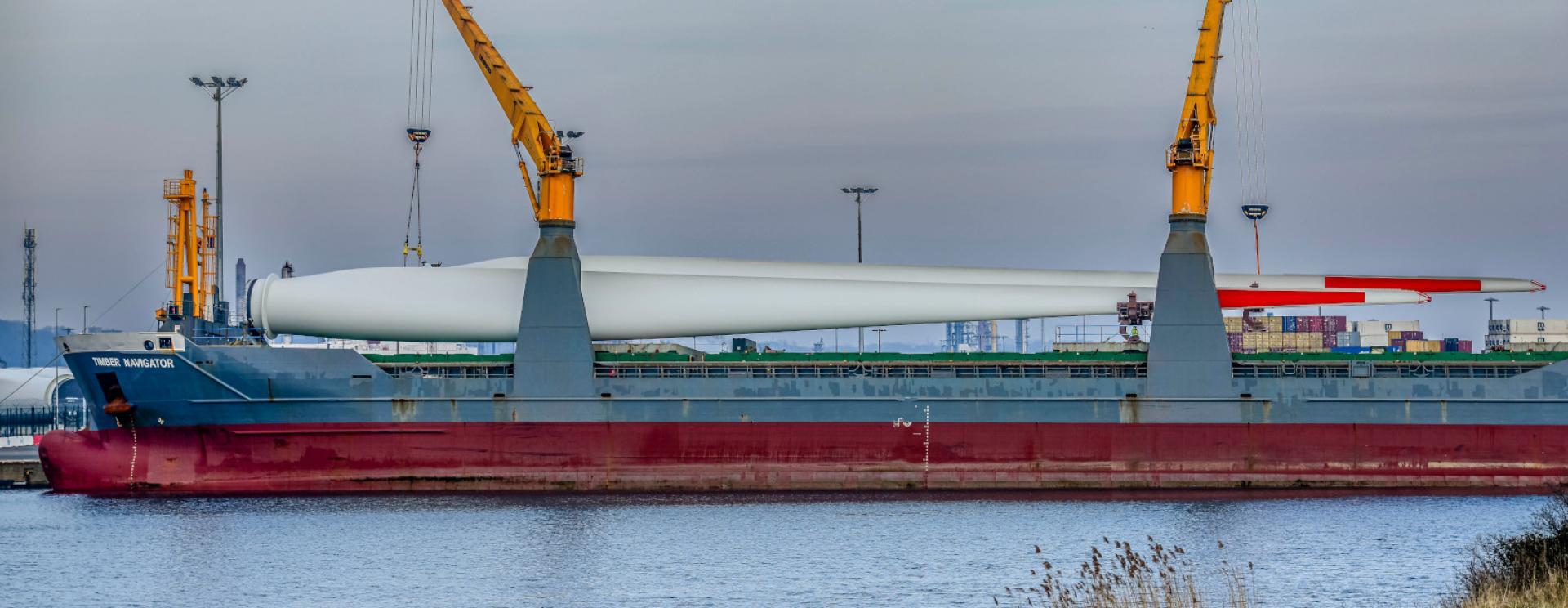
In Le Havre, the port has the infrastructure required for the development of offshore windfarms: the setting up of the Siemens Gamesa plant for the manufacture of turbine nacelles and blades – a unique European project. The port has also made an area of land available for the construction of the 72 gravity-based foundations needed for the windfarm off the coast at Fécamp.

Quayside electricity
With Voies Navigables de France (VNF), HAROPA PORT is offering freight and river cruise vessels water and power supply terminals as part of the Borne&Eau programme. The first terminals have already been installed with VNF in Le Havre, Rouen, Conflans-Sainte-Honorine, Poses-Amfreville and Gennevilliers for freight, and in the ports of Grenelle, La Tournelle, Boulogne-Legrand, Javel and La Roche-Guyon for cruises.
In 2024, HAROPA PORT has also installed 36 additional freight bollards and one dedicated to cruise ships in the port of Javel-bas.
The work begun with VNF is continuing and will bring the total number of bollards for freight boats to 96, and 36 for river cruises.
This service, which is supported by the European Union through the European Interconnection Facility, and in part by the Ile-de-France Region, reduces atmospheric emissions linked to the use of auxiliary engines to supply electricity for life on board when the boats are docked, noise and odour pollution for local residents and boatmen, and fuel and maintenance requirements.
Cruise ships will also have the benefit of quayside electricity supplies by the end of 2026
- On 30 October 20025, the first electrical connection was made at the Pierre Callet quay in Le Havre, with the MSC Poesia ship belonging to the Italian-Swiss company MSC Cruises.
By the end of 2026, all quays dedicated to cruise ships will be electrified. The electrical power delivered could reach up to 13 MW on the three quays simultaneously ; Work on the Rouen cruise terminals continues, with commissioning scheduled for 2026.

Rewarding high environmental performance
Le Havre and Rouen have joined the World Ports Climate Program (WPCAP), along with 55 other ports around the world, to combat climate change and accelerate the energy transition in ports.
Alongside this, HAROPA PORT is also encouraging ships to reduce their emissions of atmospheric pollutants by using tools such as the Environmental Ship Index (ESI), which measures ships’ environmental performance (i.e. atmospheric emissions – CO2 , SOx and NOx – compared with IMO regulatory levels). The ESI encourages and rewards those ships that are most protective of the environment.

For example, in 2020, HAROPA PORT signed a commercial agreement with TOWT, a sailing freight transport company. Where the Paris ports are concerned, an environmental trophy for the riverboat fleet has been awarded since 2016 to the most virtuous riverboats (new drive systems, alternative fuels, etc.).
Objective no. 2: to assist the organisation of a hydrogen and CO2 sector as part of Seine Corridor decarbonisation
The issue of decarbonisation is particularly crucial for the Seine Corridor due to the historical presence of an industrial fabric that emits high levels of CO2 (15% of all France’s emissions). HAROPA PORT has begun to implement, along with port and regional actors, a strategy for the decarbonisation of the local region notably through development of the green hydrogen and CO2 capture sector.
Key statistic: 40% of France’s national consumption of hydrogen is used by the four biggest industrial firms along the Seine Valley.
Capturing, storing and using CO2
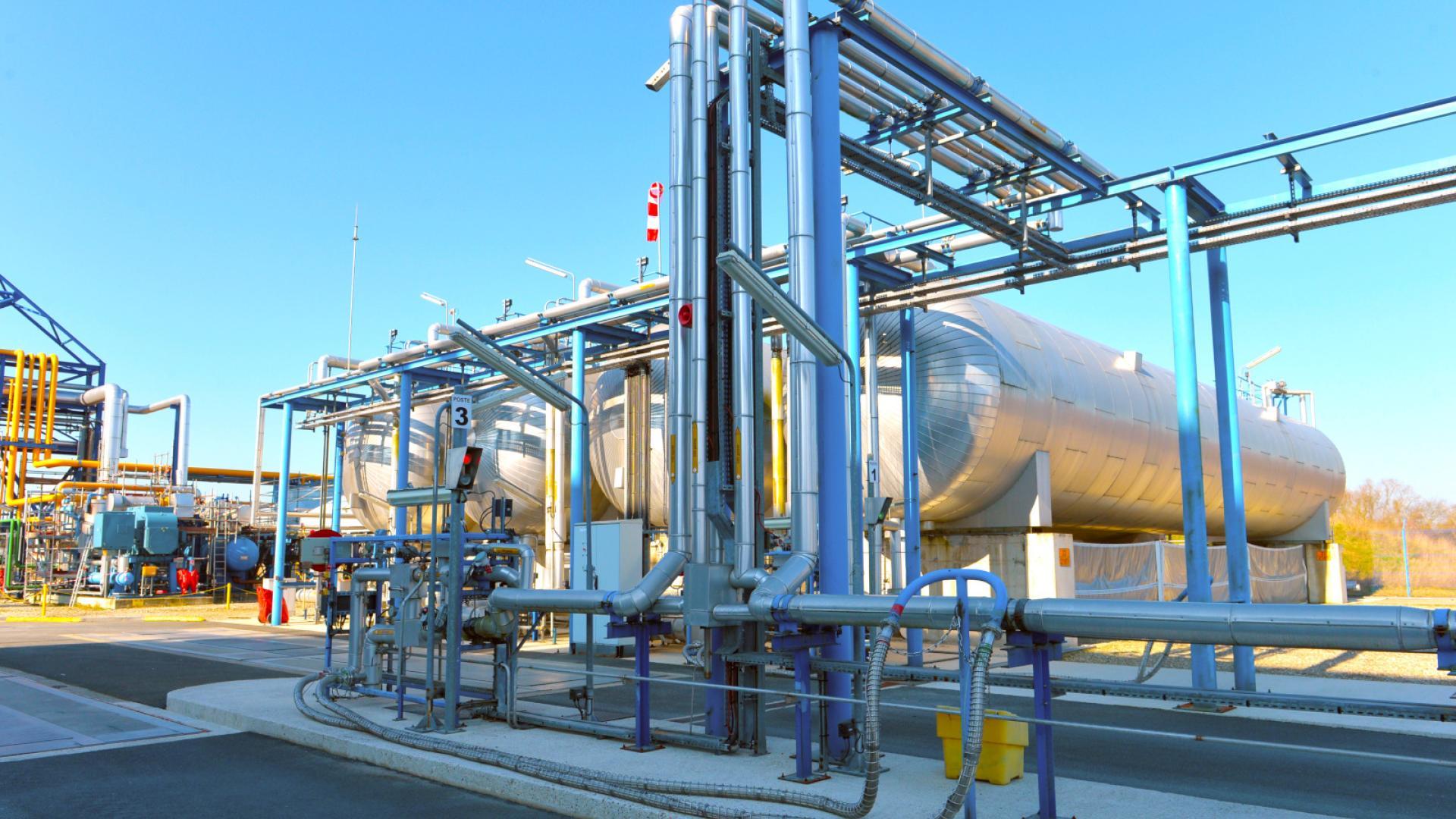
In 2021, the results of a study* into the feasibility of a CCUS (Carbon Capture, Utilisation and Storage) solution on the Seine Corridor convinced five high carbon-impact industrial companies (TotalEnergies, Yara, Exxon, Borealis and Air Liquide France Industrie) to set up a consortium to define the broad lines of a common system notably to include the transportation by boat of captured and subsequently liquefied CO2 to a final storage facility.
The future consortium plans to initiate studies, starting in 2023, to look at the shared infrastructure needed and the transportation and storage contracts. This initiative would allow 1.3m tonnes of CO2 to be captured annually by 2027.
* A study initiated in 2020 Normandy regional government, French energy agency ADEME, HAROPA PORT, Synerzip, INCASE, Air Liquide, Exxon Mobil, TotalEnergies, Lubrizol, Cabot, Suez, Tereos, Sedibex, Yara, Chevron and Borealis.
Objective no. 3: to define the impacts of climate change and collectively build regional resilience
Adapting the ports’ local areas to climate change calls for the collection of data to understand the natural phenomena and follow up work done by the experts (Normandy IPCC). This is also based on constantly raising the awareness of HAROPA PORT personnel (conservation of water resources, combating flooding, sanitary risks, methods for the adaptation of natural habitats).
HAROPA PORT | Le Havre’s coastal risk prevention plan
Under the 2016 flood directive, the DDTM (departmental, regional and maritime directorate) has worked with regional actors on a coastal risk prevention plan (PPRL) covering the area administered by HAROPA PORT | Le Havre. This has led to the mapping of flood hazards and a regulation prescribing measures for the associated urban planning for existing infrastructure and those to be followed for future construction. This regulation takes into consideration the need to develop the region while at the same time fully understanding the risks to the safety of property and people working on the port industrial area.